
CHARITY
Early Childhood Education
Today is June 4, 2024, and it is your first day of preschool in Uganda. Feeling a blend of excitement, curiosity, and a touch of nervousness, you eagerly anticipate what the day will be like. Oh, and just to clarify, it was not our first day of preschool ever, but just our first in Uganda! Little chairs and tables populate the classroom, while books, rainbow-colored blocks, and Magna-Tiles are spread out across the main carpet. While smiling and greeting each child and their parent as they walk in, we try to remember what our first day of preschool was like, all those years ago.
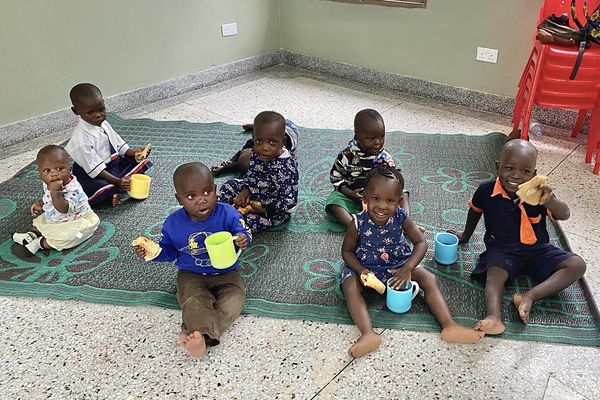
Although we may not remember our first day of preschool, we will definitely remember our first day of preschool in Uganda. Despite arriving at St. Bakhita Vocational Training Center less than twelve hours before the opening of the Early Childhood Development Center (ECDC), we made sure to be up early to set up the classroom and eagerly greet the teachers, the nine students, and their families. They say “you learn something new everyday,” and our first day at the ECDC was no exception. As the parents left, the little ones began to grapple with the unfamiliar experience of being left in the care of strangers for the day; most of whom looked nothing like them or anyone else they’re used to seeing. Then, the schedule we had planned seemed to go right out the window, as the children were not used to the structure of a school day, or the new environment they were in. Just when we thought we could not have been any less prepared, we realized we did not have a garbage can.
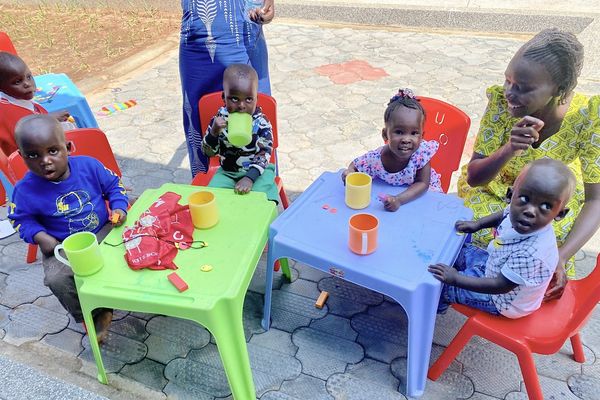
In the days following, we were more prepared and the classroom was not as chaotic as the first day. Through collaborations with the teachers, we revised and tested the schedule based on our observations of what did and did not work the first few days. During teacher training sessions, we explained the contents of the twenty thematic backpacks that were brought over between the Spring Immersion 2024 trip and our travel group. The thematic backpacks were filled with books, figurines, learning games and activities, and laminated materials that were centered around a learning topic. With sustainability in mind, most of the educational materials in the thematic backpacks are laminated and can be reused each year. The themes ranged from letters, numbers, and shapes, to different kinds of animals, sports, and emotions. This curriculum was not only designed to teach children foundational knowledge and skills, but to give the teachers the flexibility to adapt each unit to their students’ abilities from year to year.
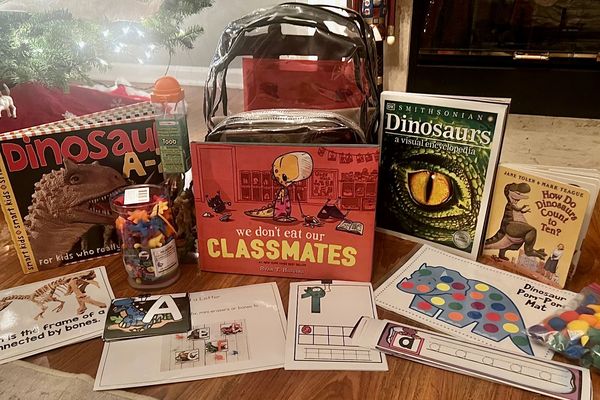
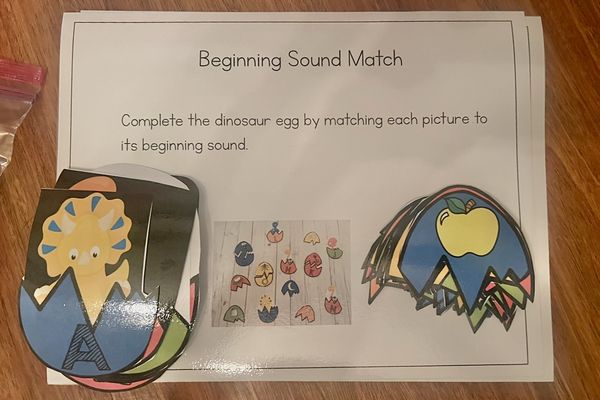
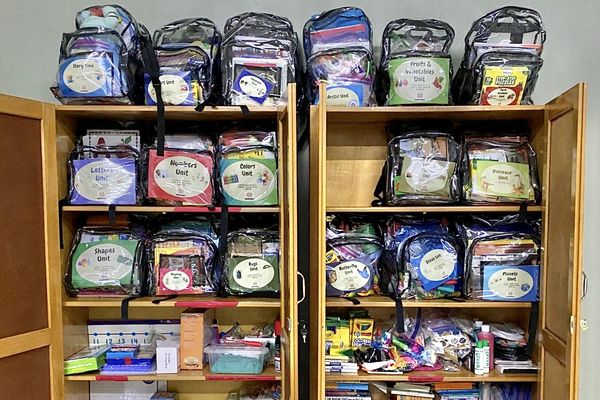
During the training sessions with Judith and Gloria, we also worked together to create lesson plans. Kathe Pribyl Pierdinock (ND ‘24) and Melissa Mendoza, M. Ed., had prepared week-long lesson plans for a couple of the thematic backpacks as examples to show the teachers. Judith and Gloria quickly grasped the creative process behind developing lesson plans and were able to conceive new learning activities with the materials provided.
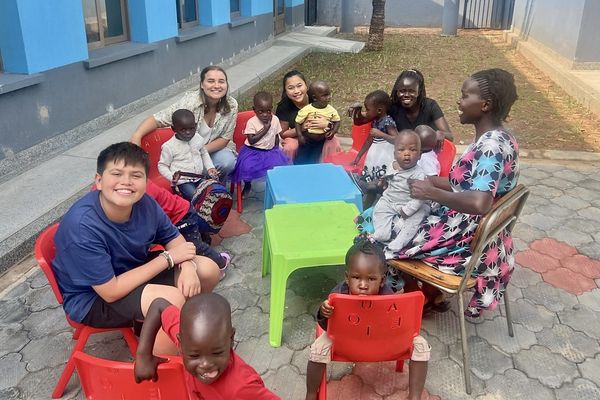
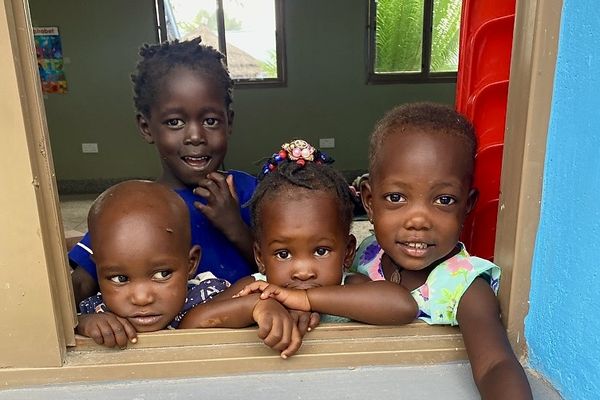
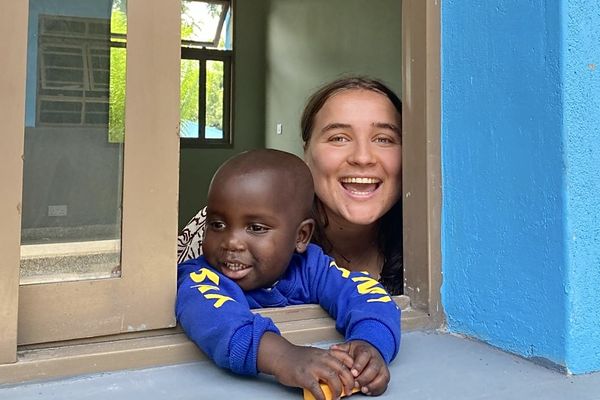
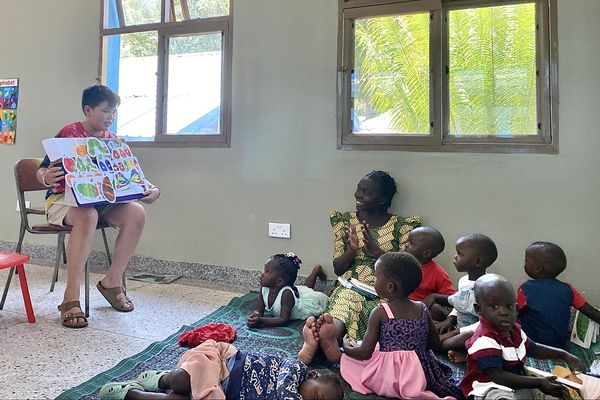
The children quickly adapted to the new structure of the school day and were excited by the various kinds of learning activities we would do throughout the day. High school freshman and son of Melissa Mendoza, Dominic Gumina, prepared multiple interactive Story Time Lessons with fun art activities for the students. The students were even able to bring home their art projects to show their families! During the day, we would switch back and forth between structured learning and free time. Having multiple activity stations set up during the free time enabled them to explore, choose what they wanted to play with, and stay engaged. Each day, the children became less hesitant to leave their caretakers. By the end of the week, they would come running into the school yard, happy to see us and excited for the day.
Each day, the children became less hesitant to leave their caretakers. By the end of the week, they would come running into the school yard, happy to see us and excited for the day.
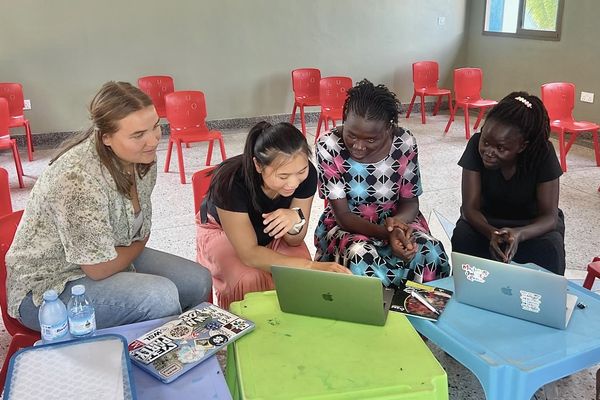
In addition to teacher training sessions and organizing supplies, we traveled to Lira to purchase the rest of the materials needed in the classroom – most notably, a wall clock and trash can! We even purchased chicken wire for the school’s chickens to support the current flock and the new chicks that would be arriving, so they would have their own enclosed space to free-range, safely. We introduced food scraps from the restaurant to bolster their diet, so the chickens would be healthy and lay eggs that could be used for high protein meals at the ECDC. By combining Melissa’s expertise raising chickens with Renee’s work on the St. Bakhita’s Poultry Project during the spring semester, and through collaboration with the St. Bakhita’s Poultry Team, we were able to make these improvements to their nutritional plan and living environment. With leftover funds from the shopping trip, we met with the carpentry team to design tables, bookshelves, and cubby organizers for both classrooms.
It is incredible to believe that just a few months ago we celebrated the opening of the St. Bakhita Early Childhood Development Center. This project – from its inception to ensure we have support for the young children of mothers enrolled as Innovation Scholars at St. Bakhita’s, to the creation of the architectural plans for the space by Notre Dame’s architecture students under the direction of Professor John Onyango, to its curriculum, and business model – has been a large-scale collaborative effort between Notre Dame’s students, faculty, alums, and donors, and the St. Bakhita’s leadership and Kalongo community. Our group is honored to have played an integral role in designing and fundraising for the ECDC curriculum over the past year. Witnessing the vision of providing the young children of Innovation Scholars, Fellows, and community members with a safe place to learn and grow, become a reality, has been immensely rewarding. Before the ECDC was established, it was common to find the students’ children wandering around the classroom or in their mothers’ arms. Additionally, families in the Kalongo community struggle to fulfill their own job, housework, farming, and other daily commitments while taking care of their children. Now, the ECDC enables the mothers at the school and in the community to focus on their education, jobs, housework, and other duties, while their children can learn and develop in their own safe environment.
The ECDC enables the mothers at the school and in the community to focus on their education, jobs, housework, and other duties, while their children can learn and develop in their own safe environment.
Just as Notre Dame’s teaching philosophy aims to educate the whole person, our goal for this learning center is for it to care for the whole child. Not only will these children receive an intellectually stimulating education, but they will receive diverse and nutritious meals, be bathed, and get their teeth brushed. Working closely with pediatrician and ND alum, Dr. Carrie Quinn, this program is designed to foster and assess the students’ early childhood development milestones. Research has shown that early childhood education – especially between birth and five years of age – plays a vital role in brain development and building a strong foundation for later cognitive, emotional, and social growth. The ECDC aims to empower the children of the Kalongo community to become curious, confident, and creative thinkers. We strive to show the importance of early childhood education to encourage families to keep their girls and boys in school.